(These pages correspond to the content shown on the digital screen panels at the Temple Israel Museum.)
The Temple Israel Foundation was established in 1987 for the purpose of acquiring the building which had once been the synagogue and to raise funds to acquire the Hebrew Cemetery. The foundation purchased the building in 1992 and continued to run it as an apartment complex until restoration became feasible. Soon after, the Colorado State Historical Fund approved a planning grant to document the existing structure and to develop plans for its restoration.
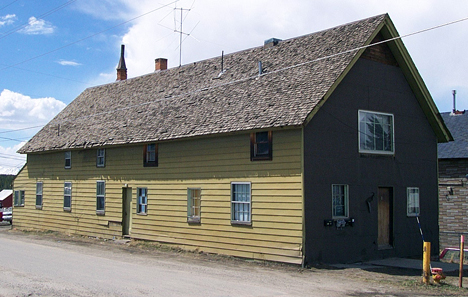
Temple Israel building before restoration efforts began.
The foundation received a second grant from the State Historical Fund for the restoration of the front façade in 2001. Restoration of the façade took approximately three months, plans for which were guided by exterior photographs from when the building was still in its original configuration. The spires are made from solid copper plates which have since developed a natural patina.
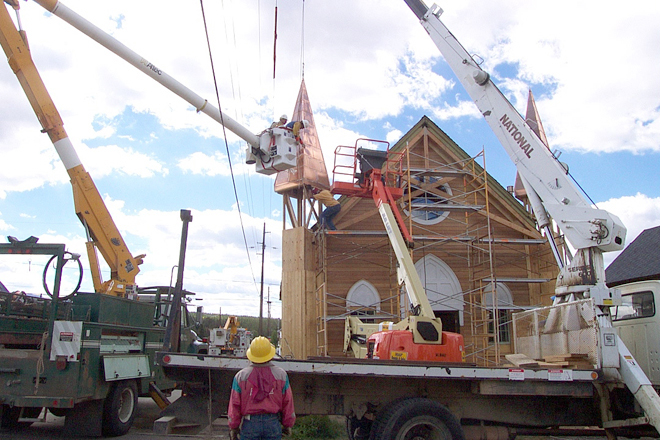
Placement of the copper spires on the front façade.
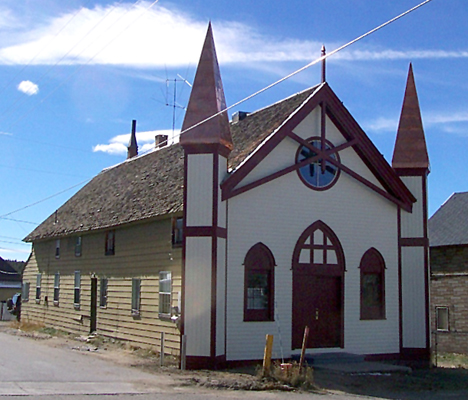
Restored front façade in 2001 with the restored spires.
On May 4, 2006, the building suffered a fire caused by an electrical short in a light switch on the back porch. Much of the damage was caused by water from firefighting efforts, whereas the fire and smoke damage was largely confined to the wall and rafters in the southwest corner of the building. The push towards full restoration was prompted by the necessity of repairing the building after the fire.
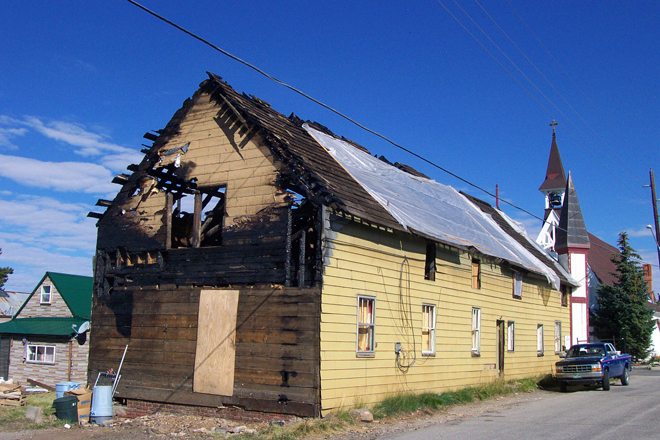
Damage from the fire was largely limited to the southern end of the building.
The interior was gutted to prepare for the restoration soon after the fire, being completed by summer 2006. While waiting to receive permission to commence full restoration, the curator’s unit at the rear of the building was added. The State Historic Fund granted permission to begin full restoration in March 2007, and the exterior was completed by fall 2007. Nearly all of the structure’s original shell was preserved despite the fire. The roof had to be fully replaced, however, having saved some of the original rafters that were still structurally sound.
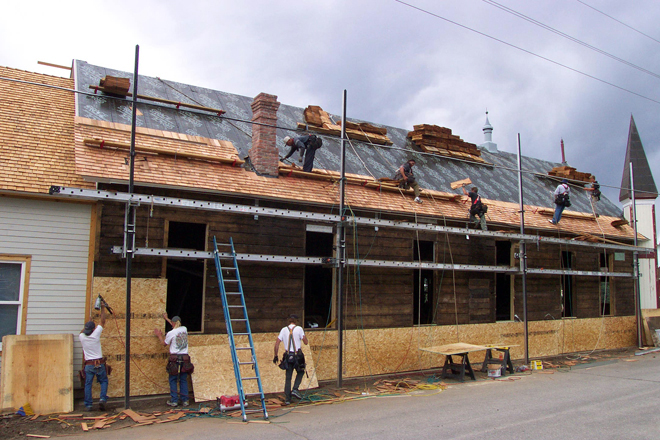
Workers replacing the roof and beginning work on the siding.
Interior restoration began in winter 2007 and finished by May 2008, guided by an interior photograph taken in 1894 and by newspaper primary sources. The exact pattern and color of the paint on the walls came from remnants of the original paint discovered prior to the fire and during the restoration. The building did originally have carpet, which can just be made out in the 1894 photograph; however, the original design and color are not known. The existing carpet features a pattern which is historically appropriate for the period in which the building was constructed. The pews were reconstructed using the 1894 photograph and with measurements from the Episcopal church’s pews across the street, which appeared nearly identical and likely originally made by the same company.
The restoration was completed on budget and on time with most of the work performed by Leadville locals for a total cost of $600,000. Funding came from State Historic Fund grants, the insurance settlement from the fire, and private donations.
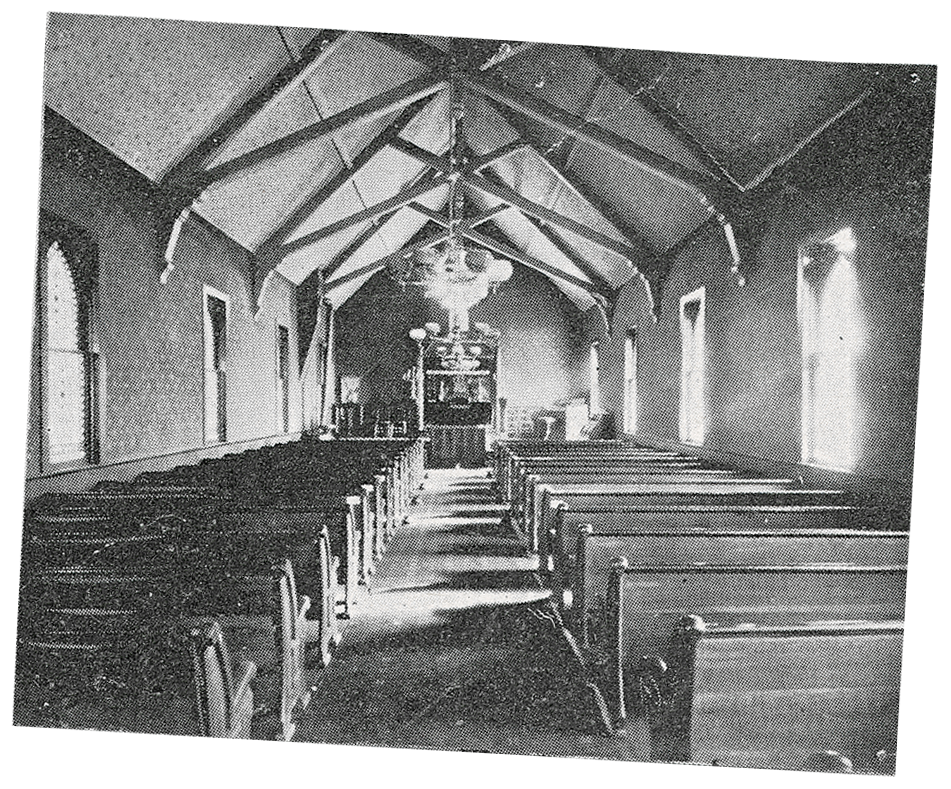
This black and white photograph of the synagogue’s interior, published in 1895, was vital to authentically restoring the interior. Even with its halftone pattern, enough information was extractable to determine restoration elements.
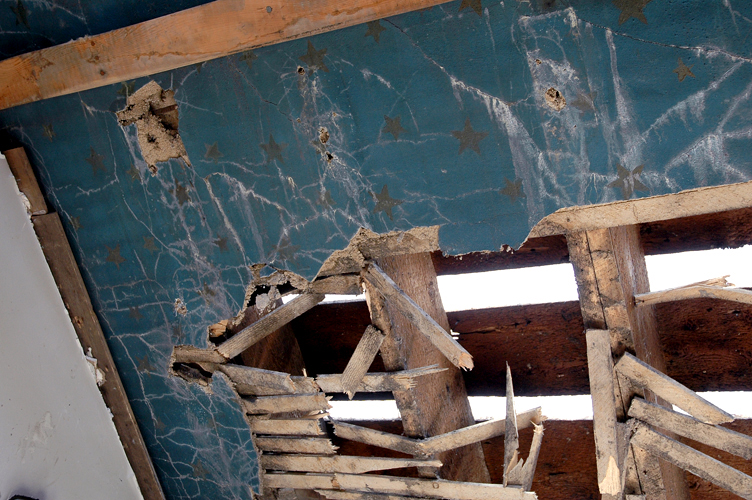
Remnants discovered in 2007 of the original stars on the plaster and lathe ceilings and walls allowed for creating stencils for the restoration.
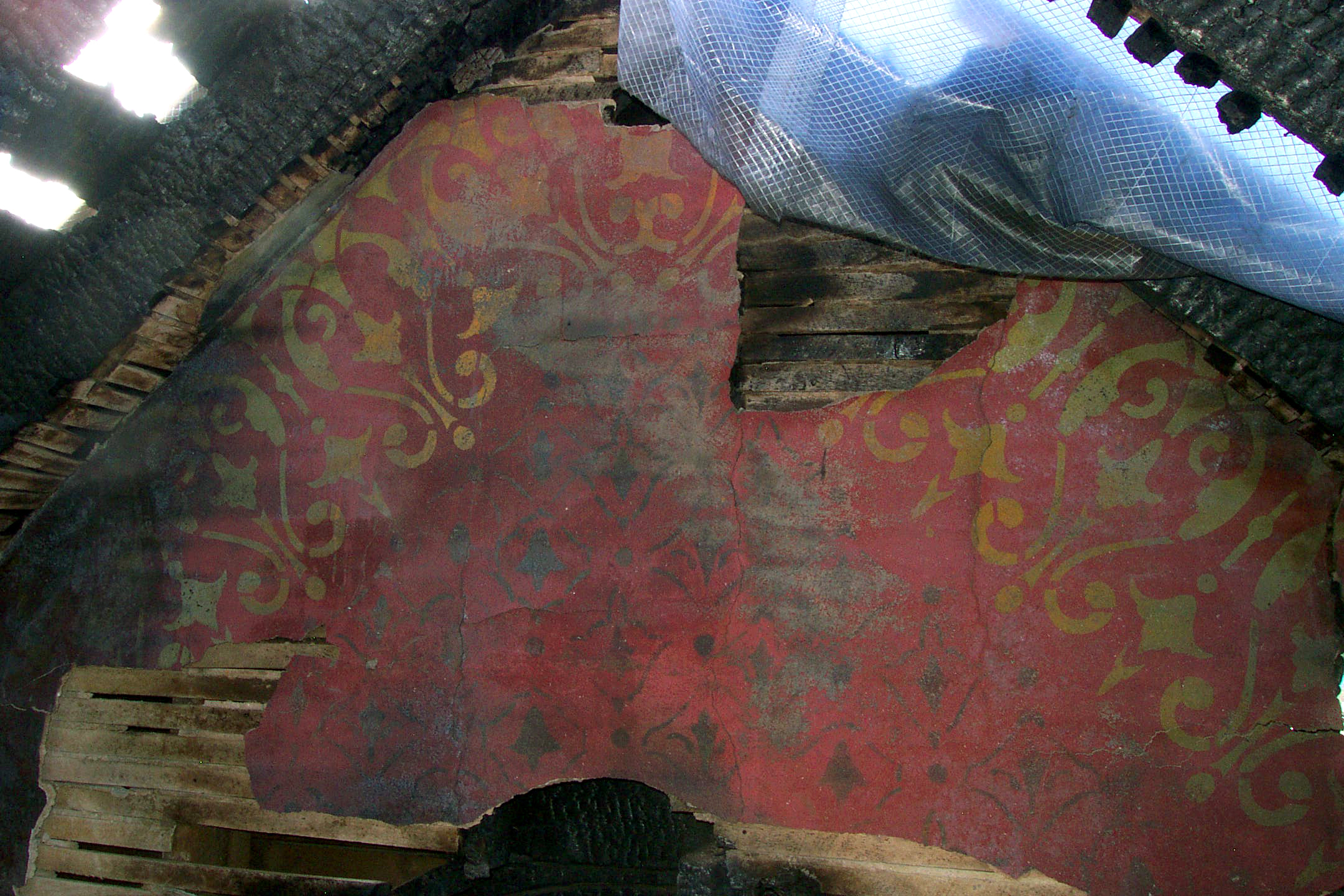
Likewise with the stars, discovering the original patterns on the red plaster and lathe gable wall also allowed for creating stencils to replicate the pattern for the restoration.
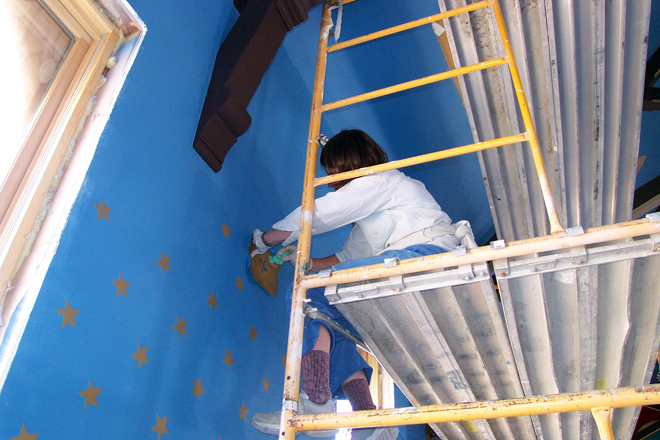
Leadville local Lisa Dowdney and her sister, Deborah Seaman (not pictured), painting the stars on the walls and the ceiling using the stencils with gold metallic paint. The stars on the walls are the same size and laid out in a pattern. The stars on the ceilings are several sizes and randomly laid out.
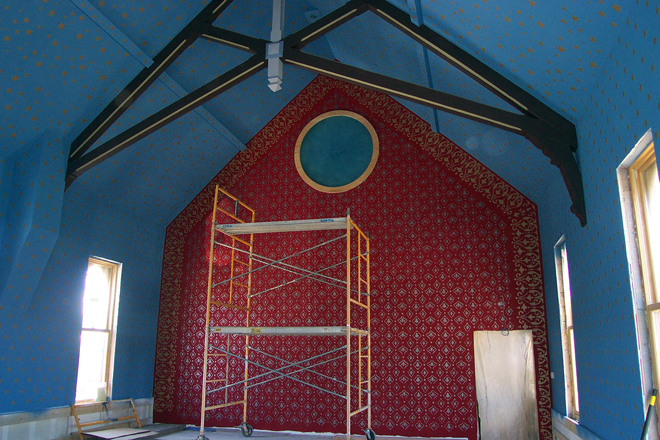
The back red wall with the design stenciling is complete. The field has a silver metallic painted design, while the border has a gold metallic painted design.
Click for more information about the following: