(These pages correspond to the content shown on the digital screen panels at the Temple Israel Museum.)
Although gold initially brought people to the Leadville area in 1860, it was silver that was mined from the mid 1870s that caused the city to grow rapidly. In 1877, a massive influx of people sought to get rich through mining or mining related enterprises. As with the California Gold Rush of the 1850s, the Jews who came to Leadville principally became involved with providing goods and services to miners.
Scores of the 19th Century European Jews who immigrated to the United States belonged to a tradition of tailoring and pedaling. People in these related trades found that the potential for economic growth and the lack of anti-Semitism made western North America ideal for advancement. Within the burgeoning city of Leadville, many of these businesses were concentrated on the east and west sides of the 300 block of Harrison Avenue.
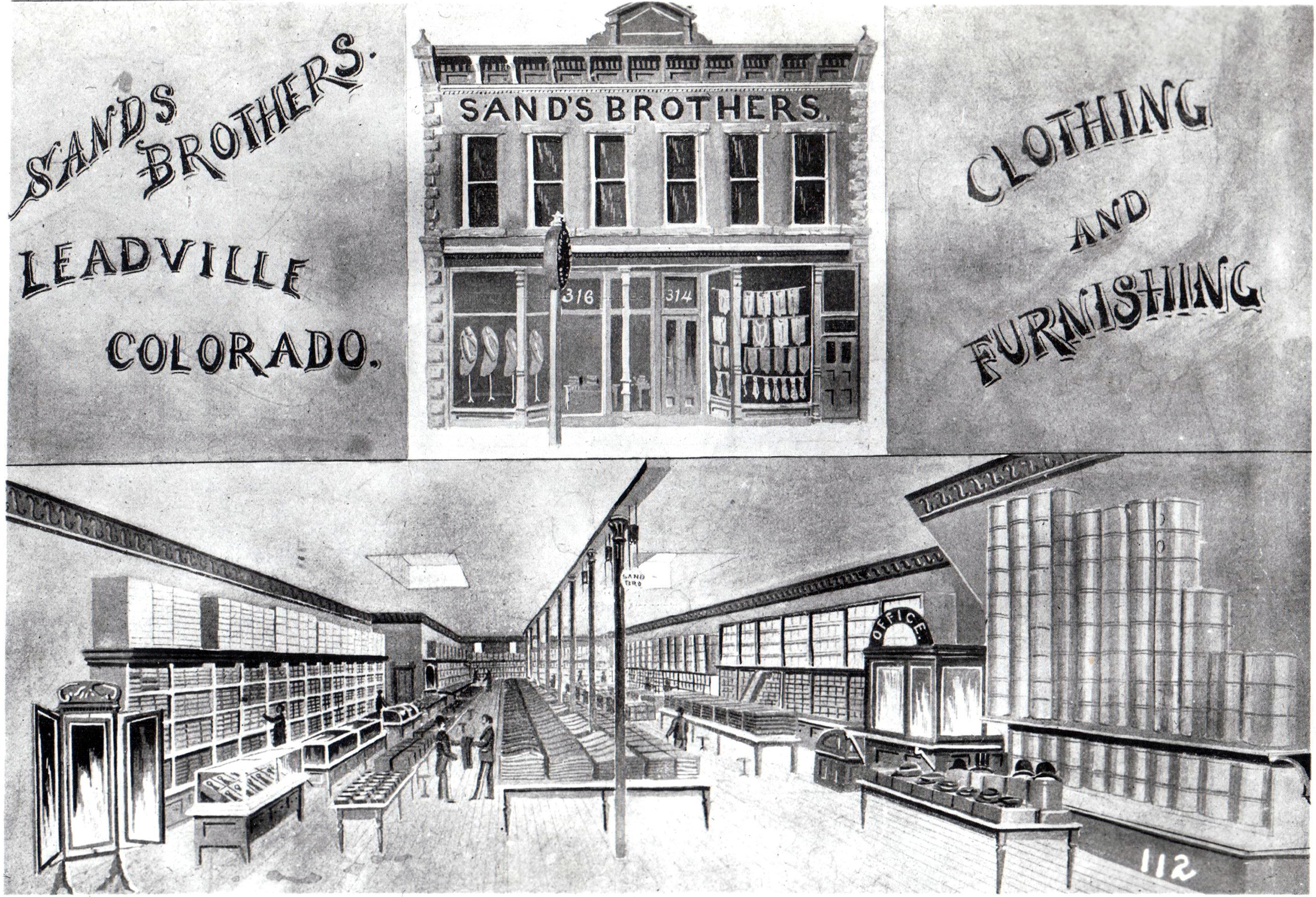
Advertising card for Sands Brothers Clothing & Furnishing, circa 1890.
Some Jewish immigrants came to Leadville fully intent on mining for themselves only to find that fate had other plans. David May immigrated to the United States from Bavaria (now known as the Rhineland) in 1865 at the age of 17. He worked for his uncle at a clothing factory in Ohio and gained valuable retail experience while in the employ of a clothing store in Indiana in which he became partnered. Having sold his interest in the store. May, an asthmatic, relocated to Colorado in 1877, and after visiting the Arkansas Valley on a fishing trip in 1878, he remained in Leadville with the intention of mining in the belief that it would be good for his health. After his first season yielded no profits, May and his partners gave up on the claim.
May remained in Leadville and returned to his career as a clothing retailer. Initially partnering with brother-in-law Moses Shoenberg, The May Company ultimately grew from a small store on Harrison Avenue to one of the largest clothing enterprises in the world. May also served in public office as the Lake County Treasurer and as vice president of the Congregation Temple Israel. It was in this capacity where he became the custodian for the land donated to the Jewish community by Horace Tabor in 1884 for the purposes of building the synagogue.
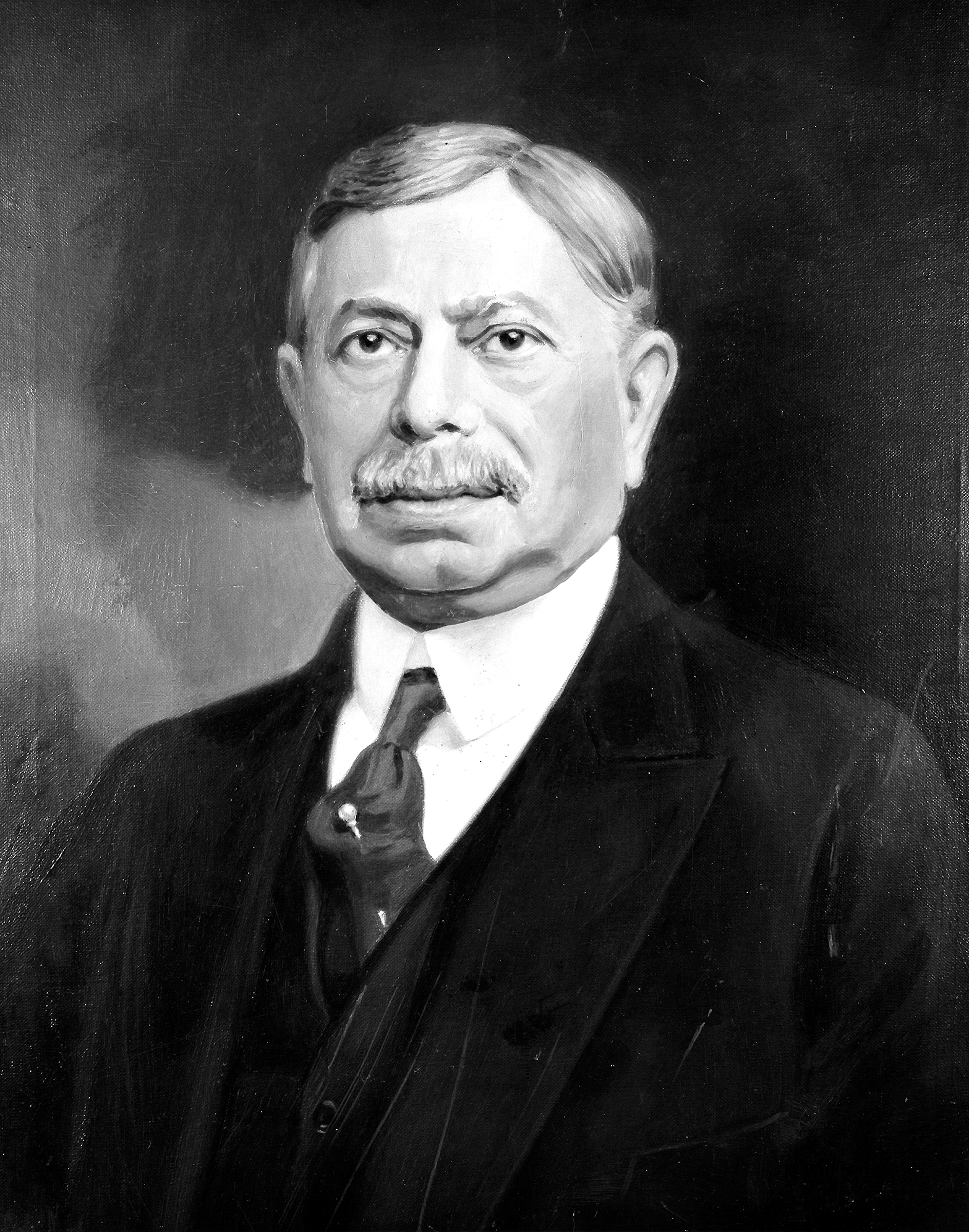
Painted portrait of David May.
Another investor unfamiliar to mining who came to Leadville with grand designs was Meyer Guggenheim. The family, best known today for their philanthropy, began to develop their massive multi generational wealth when Meyer purchased a 25% share of the struggling A.Y. mine for $4000 during the fall of 1880. Within a year, under the Guggenheim & Graham mining company’s management, the property was producing for Meyer a reported $17,500 in profit per month. Before the end of the decade, Meyer Guggenheim and his sons, Simon and Daniel, had ventured into mineral processing and had built two enormous smelters in Denver and Pueblo, Colorado. Meyer’s son, Benjamin, had moved to Leadville in 1884 to learn the mining trade, and in 1888, he assumed management of their Leadville operations. In 1900, the Guggenheim Brothers Smelting & Refining Company was purchased by the American Smelting and Refining Company (ASARCO) for $38 million. However, during the preceding year, Daniel Guggenheim had acquired a majority share of ASARCO public stock. When the merger was completed on April 8, 1901, the Guggenheims seized immediate control of the company and installed Daniel as its president, leading a board that included four of his brothers. Daniel would be succeeded by his brother Simon in 1919. By the late 1930s, under Simon's direction, ASARCO had amassed 25 smelters, 26 operational mines bearing a wide variety of ore, and 10 processing plants all located in the United States, Canada, Mexico, Peru, and Chile. A Guggenheim sat at the head of the ASARCO board of directors until 1957 when Daniel’s son-in-law, Roger Strauss, retired as the company’s president.
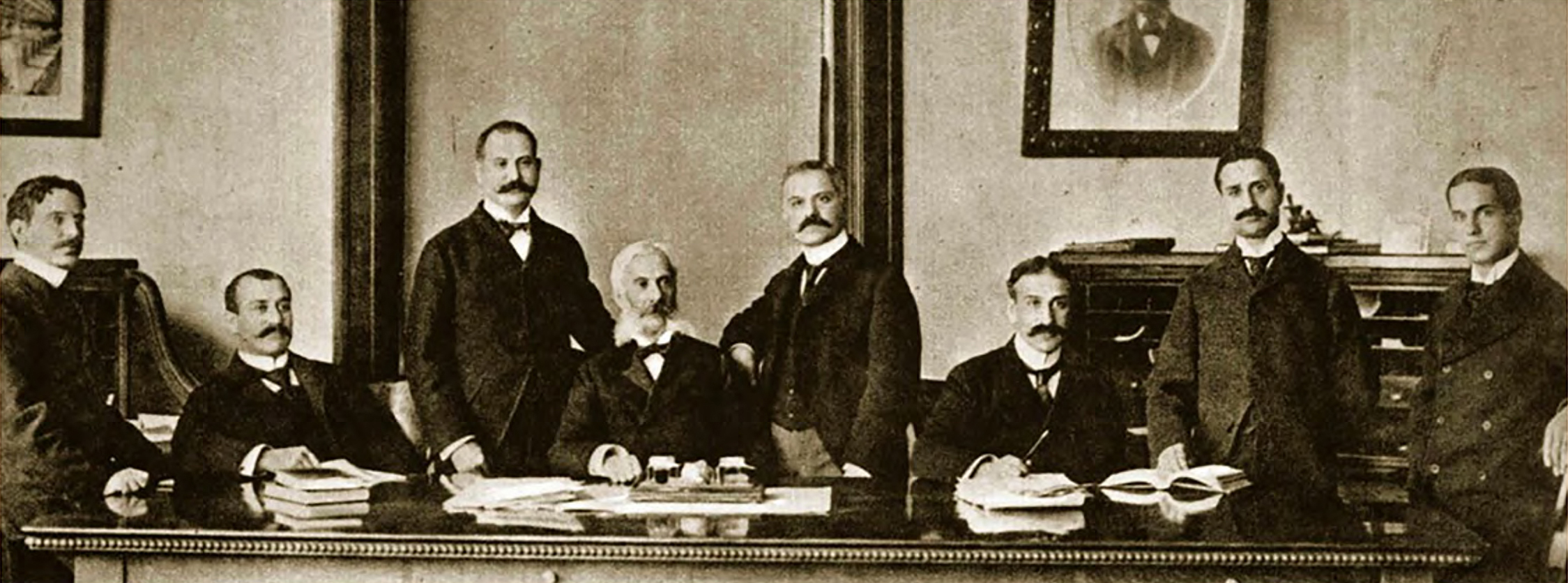
From left to right: Benjamin, Murray, Isaac, Meyer, Daniel, Sol, Simon, and William Guggenheim.
Among the important dry goods and clothier shops operated by Leadville’s Jewish pioneers, Monheimer Brothers was also quite successful. Joseph H. Monheimer served as a Lake County commissioner beginning in 1883, and in 1884, he was elected president of the Congregation Temple Israel. He would later administer the estate of a well known Leadville madam following her death.
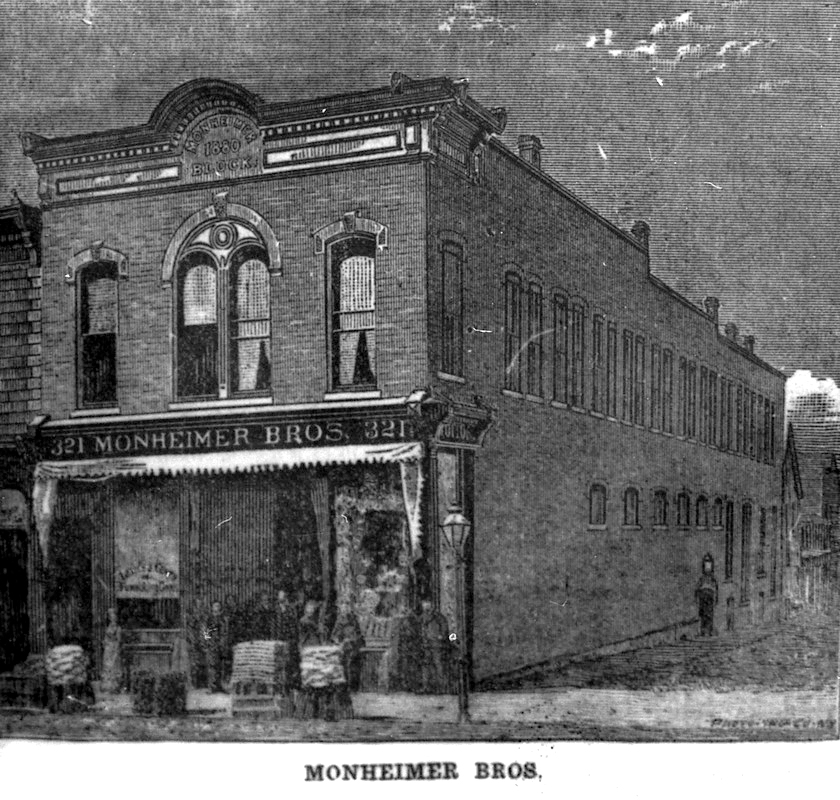
Monheimer Brothers store at 321 Harrison Avenue.
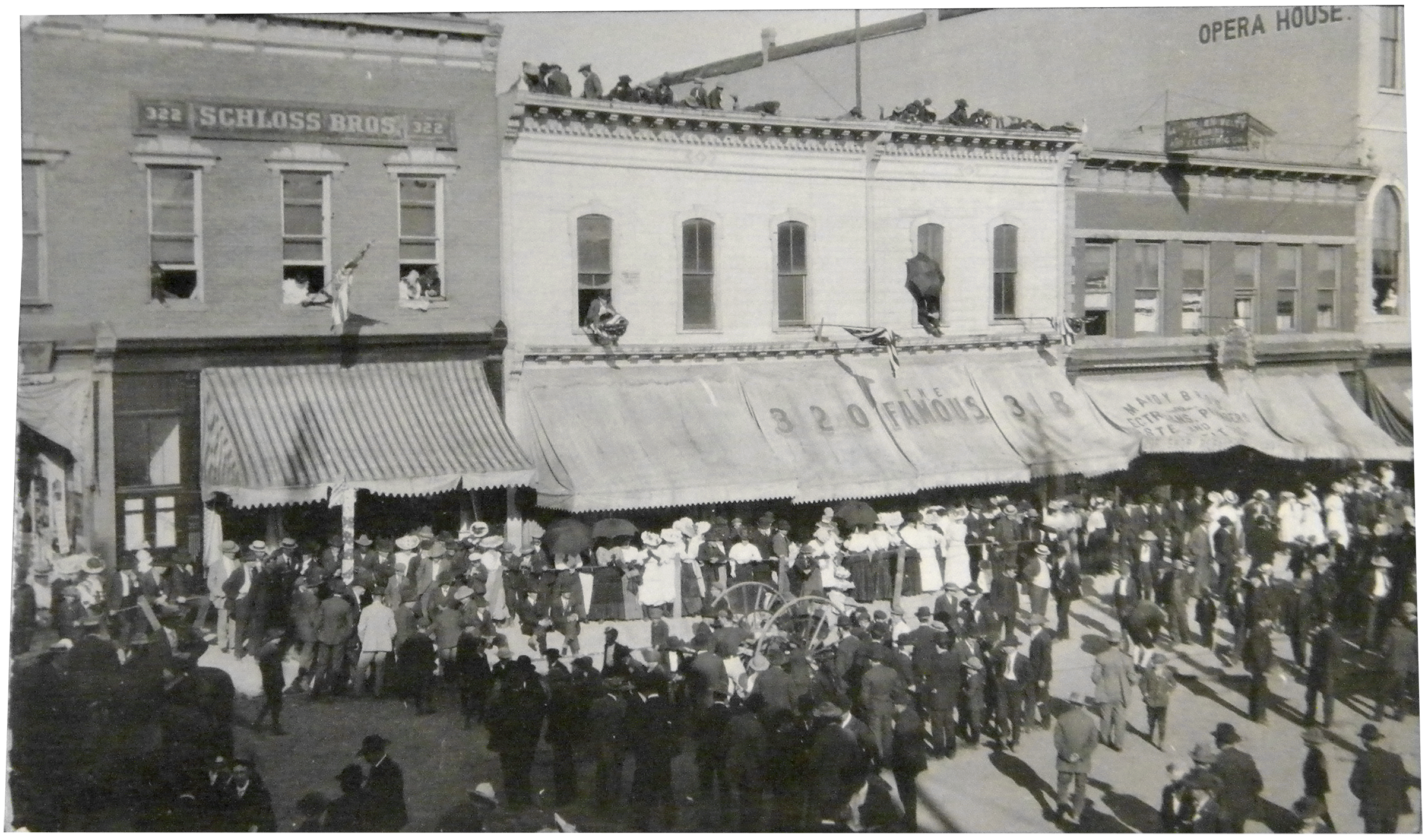
Image of the 300 block of Harrison Avenue looking southeast during a parade. Schloss Brothers was located at 322 Harrison Avenue to the left. May and Shoenberg, The Famous, Hyman’s Saloon, and Sands Brothers were all successful Jewish owned enterprises located on this block.
For more information about families specifically mentioned on this page, click the surnames below:
Click for more information about the following: